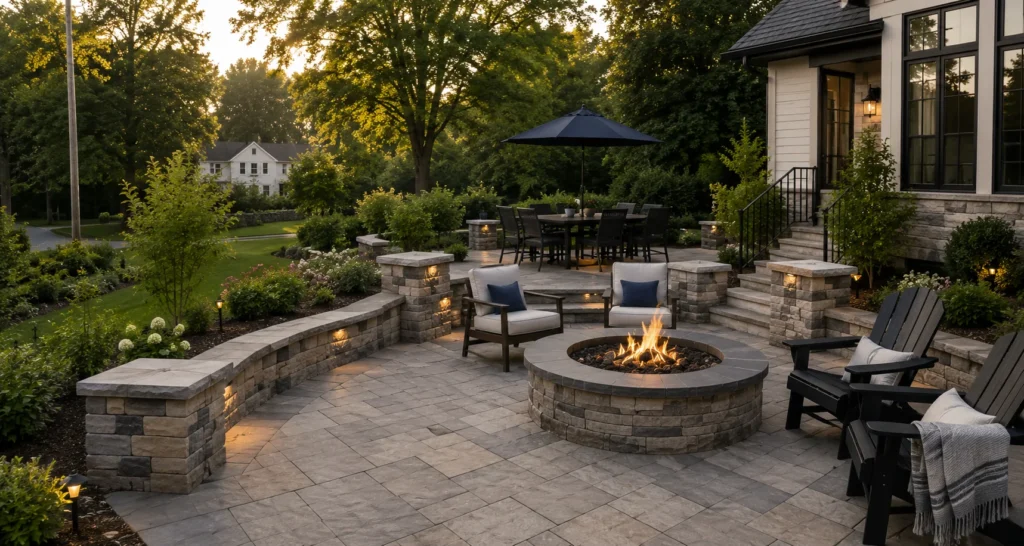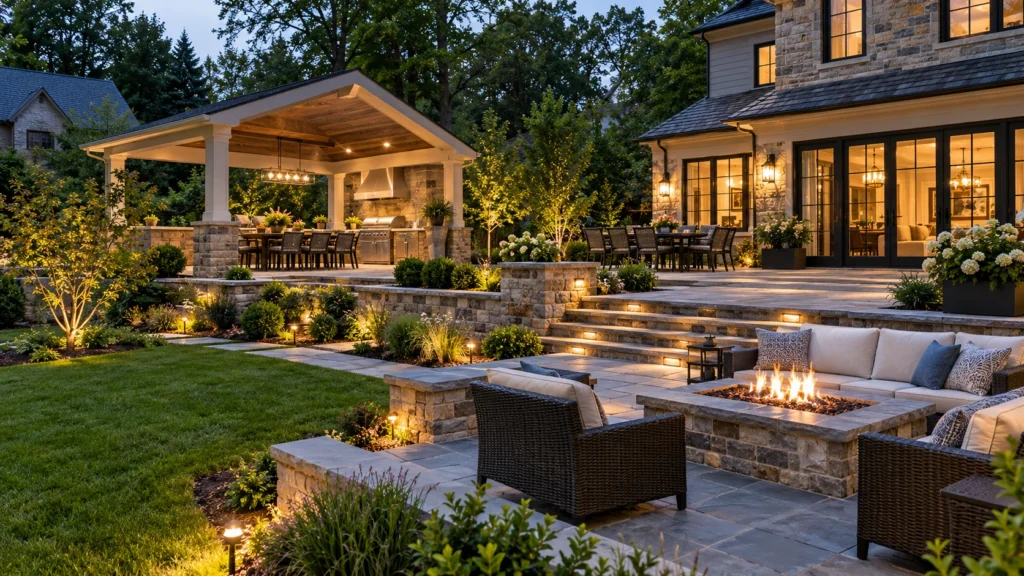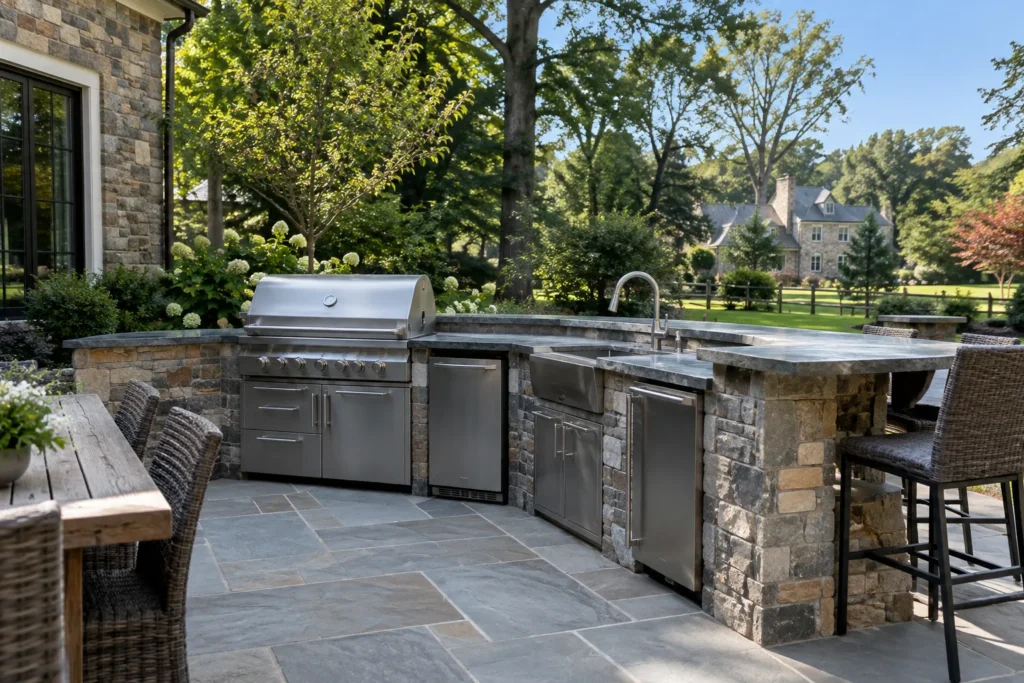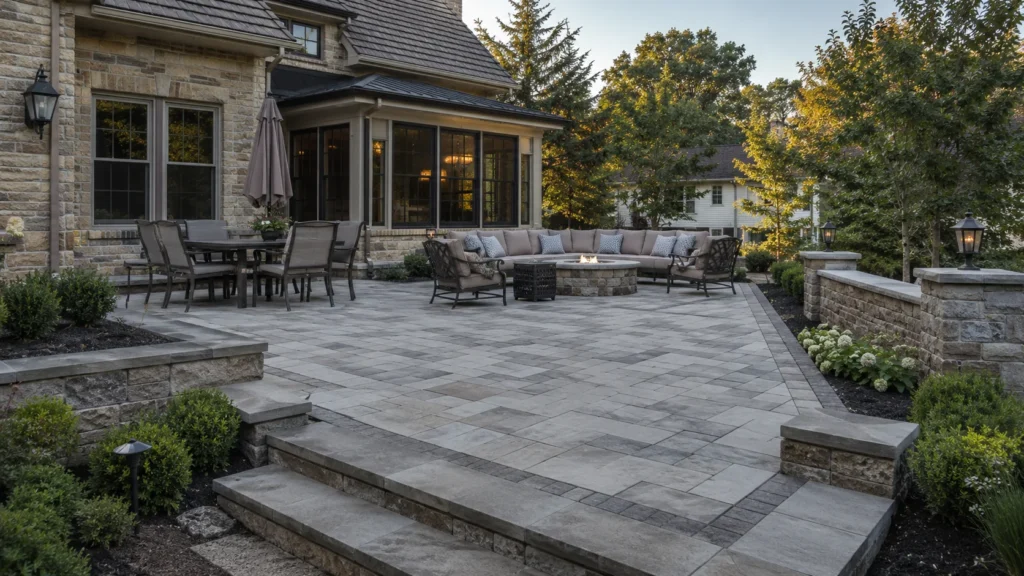
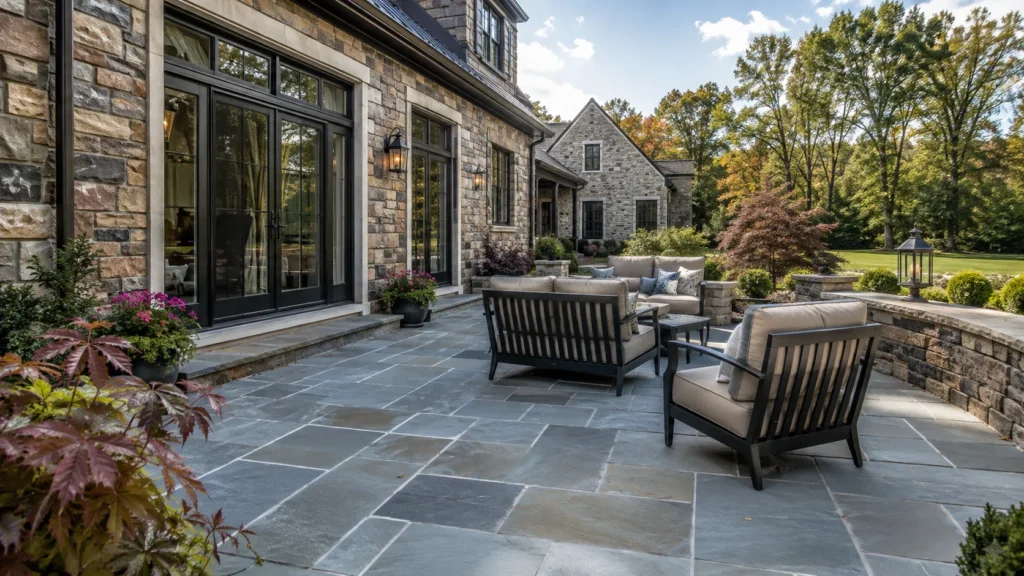
If you’ve started researching flagstone, bluestone, and pavers for a new patio, you’ve probably noticed that everyone has a strong opinion — and that opinion often depends on what a particular contractor happens to install. At Main Line Hardscapes & Masonry, we’ve built patios with all three materials across Wayne, Villanova, Haverford, Gladwyne, and the rest of the Main Line for more than 15 years. So rather than steering you toward whatever’s easiest for us to source, here’s a straightforward, no-pressure breakdown of what each material actually offers — and how to think about which one belongs on your property.
Flagstone: Irregular, Timeless, and Full of Character
Flagstone is natural, quarried stone cut into irregular, one-of-a-kind pieces — no two flagstone patios ever look quite the same. That irregularity is exactly what gives it such a strong sense of age and permanence; it reads as though it’s always belonged on the property, which is part of why it pairs so naturally with older Main Line stone homes and gardens with a more organic, established feel.
Because each piece has to be hand-selected and fitted rather than dropped in on a uniform grid, flagstone installation takes more skill and more time than a patterned material. It can be laid with mortared joints for a clean, formal look or dry-laid with polymeric sand for a softer, more garden-path feel. Either way, the character comes from the stone itself — not from a manufacturing process.
Bluestone: Clean Lines for a More Tailored Look
Bluestone is also a natural stone, but it’s typically cut into more regular, rectangular shapes with a cooler blue-grey tone and a smooth thermal finish. Where flagstone leans organic, bluestone leans architectural — it reads as more tailored and precise, which is why it’s a common choice for homeowners with newer construction or a more formal, symmetric outdoor layout.
The more consistent format makes the layout process a bit more predictable than flagstone, though you’re still working with a natural material, so color and veining will vary slightly from piece to piece. The thermal finish also holds up well underfoot around pools and entertaining areas, which is part of why it shows up so often on Main Line properties with poolside terraces.
Pavers: Engineered Consistency and Design Flexibility
Pavers are manufactured rather than quarried, which gives you the most control over color, pattern, and budget of the three options. Modern paver lines have come a long way — many now closely mimic the texture and tone of natural stone — and because every unit is a consistent size and thickness, they open up laying patterns like herringbone and running bond that aren’t practical with irregular natural stone.
For larger patios, driveways, or properties where a homeowner wants a more predictable material cost, pavers are often the right engineering trade-off. What you’re giving up is the one-of-a-kind character of a natural material; what you’re gaining is consistency and a wider range of design options.
Why the Installation Matters More Than the Material
Here’s the part most articles on this topic skip: no matter which material you choose, a patio is only as good as what’s underneath it. Sinking, heaving, and shifting almost never come from the stone or paver itself — they come from inadequate excavation depth, poor compaction, or a base that wasn’t engineered for Main Line’s clay-heavy soil and freeze-thaw cycles.
This is why we treat every project as an engineering problem first and a design problem second. Heath is on-site from the first conversation through the final walkthrough — there are no subcontractors handing your project off to a crew you’ve never met. Materials are hand-selected, pricing is locked before we break ground, and the goal on every job is the same: done once, done right. That philosophy matters more than which material you land on, because a well-installed paver patio will outlast a poorly installed flagstone one every time.
Which Material Is Right for Your Main Line Home?
As a rough starting point: flagstone tends to suit older, stone-built Main Line properties and gardens where an organic, established look is the goal. Bluestone tends to suit newer or more formal homes, especially around pools and entertaining spaces where a cleaner line reads better. Pavers tend to suit larger surfaces or homeowners who want more predictability in both design and cost.
But those are starting points, not rules — the right answer depends on your home’s architecture, how you plan to use the space, and your site’s specific drainage and grading. That’s exactly what an on-site consultation is for.
Frequently Asked Questions
Is flagstone or bluestone more expensive?
Both are natural stone, so they carry a higher material cost than pavers, and pricing depends on thickness, sourcing, and the complexity of the layout. Flagstone’s irregular shapes generally take more labor to fit than bluestone’s more uniform cuts, which can affect the total project cost.
Can pavers really look like natural stone?
Modern paver lines have improved significantly and can closely replicate the texture and color variation of natural stone at a lower material cost. They won’t have the exact one-of-a-kind character of quarried stone, but for many homeowners the trade-off is worth the added design flexibility and predictability.
How long will a properly installed flagstone or bluestone patio last?
With proper base preparation and drainage, a natural stone patio is a generations-long investment, not a decade-long one. The material itself is durable; what determines the lifespan is almost always the quality of the base underneath it.
Do you install all three materials, or do you specialize in one?
We install flagstone, bluestone, and pavers, along with natural stone walkways and retaining walls. We don’t push clients toward one material — the goal is to help you choose the right one for your home, then install it correctly the first time.
Choosing between flagstone, bluestone, and pavers for a new patio installation isn’t something you have to figure out alone. Schedule a free on-site consultation with Main Line Hardscapes & Masonry, and we’ll walk your property, talk through what fits your home and how you plan to use the space, and give you a clear, fixed-cost picture before any work begins. Call (610) 212-5672 to get on the schedule.